Return to Front Page
Return to previous page
G3 ZME Telford & District Amateur Radio Society G6 ZME
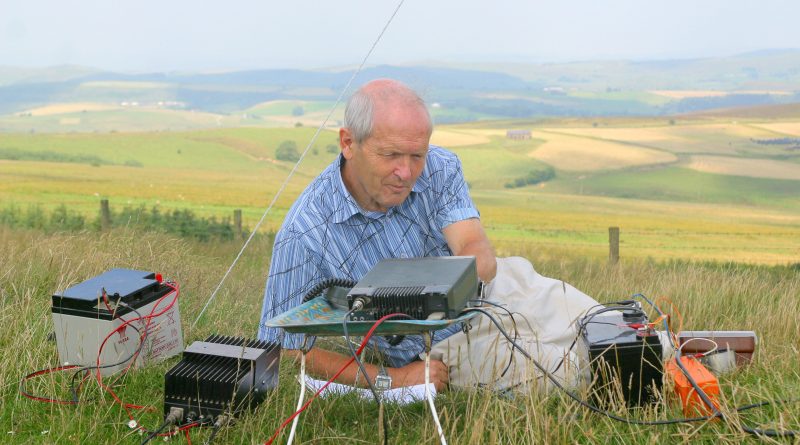
2011 Marconi day TDARS report. Look at the Newsletter 246 May 2011

At the Club Martyn G3UKV gave a interesting and informative presentation about Marconi's activities at Tywyn To view his excellent powerpoint presentation  follow link  Marconi Tywyn

More about Marconi   Marconi Calling

Marconi’s Receive station at Tywyn, Gwynedd, Wales.


International Marconi Day, Saturday 30th April 2011.

Our Club will operate from the Marconi Receiving site at Tywyn.

Join us on the Saturday, or for a long weekend Fri 29th April until
Sunday 1st May.

For more details or to register your interest, please contact Simon
M3SET on 01588 674918


This receive-only station was constructed in 1913 to replace the abandoned stations at Clifden and Letterfrack in Ireland. Various developments were made until its demise in 1923, when its duties were taken over by the completion of the improved facilities at Brentwood (Essex).

Tywyn was built as the sister station to the Waunfawr high power transmitting station about 40 miles north, near Caernarfon. The site, which was visited by Marconi in person, is at NGR SH 594002, on the south side of Tywyn.
It had two main antenna systems, attached to five 300ft. lattice masts, aligned for east/west reception.. A ‘balancing’ aerial was also constructed on 80ft. masts at right angles to the main antenna, to provide some nulling of the powerful Waunfawr transmitter to the north. Finally it had a reserve antenna mounted on 36 wooden masts at 30ft. height.

Tywyn’s principal purpose was to receive spark transmissions from Glace Bay, Nova Scotia, and New York, but it also forwarded messages from other parts of the globe, including for the very first time, Australia on 22nd. September 1918. It had a land-line link to the Central Telegraph Office in Fenchurch Street, London, and a direct wired link to the transmitter at Waunfawr which it could operate remotely.
During WW1, the Post Office controlled Tywyn on behalf of the Admiralty, and it introduced one of the first shift systems to make possible 24 hour operation. The majority of the eight operators were women at this time, since so many men were on active war duties. The receiving operator would sit alongside the transmitting operator who had remote control of the Waunfawr transmitter.

In March 1920, full duplex operation with Waunfawr became possible, and operational speeds of 10 letters per second became practical.

Eight bungalows were built after WW1 to accommodate the operating and technical staff, and these still exist, although they are now privately owned. The main station building also still exists, but has been divided into two semi-detached houses. Alongside this is the old generator building which has also been adapted to other purposes.


More about Marconi   Marconi Calling